
Come to the Table: Healing Herbs, Ancient Lore & a Recipe for Your Easter Weekend
"Long before the church bells rang and the colored eggs were hidden, spring was already acknowledging new life — and the herbs blooming in the meadow knew it first."
Good Morning, Framily! Welcome back to Tuesday, the day we slow down, tend to our herbs, and remember that the most potent healing has always come from the earth beneath our feet. This week, Easter sits at the doorstep — and what a rich, layered threshold it is.
Whether you gather at the church, celebrate with a small circle of family and friends, or simply sit at your own sunlit kitchen table, Easter weekend carries a current of profound, ancient energy: death and resurrection, darkness giving way to light, the cold earth cracking open to release new life. And woven through all of it — growing quietly alongside every sacred tradition — are the same herbs our grandmothers knew, herbs that appear in scripture and folklore alike, that were burned in temple fires and steeped into healing teas.
Today we're exploring four of those herbs — their ancient pagan roots, their appearances in the Bible, their healing gifts, and how to bring them to your Easter table in the most delicious way possible. We'll also peek at why a rabbit and a decorated egg became the face of a holiday about rebirth (it's a better story than you might think).
✦ ✦ ✦
🌿 The Sacred Spring Herbs
These four herbs have traveled through millennia of human ritual, medicine, and cuisine. They were carried by healers and pilgrims, buried with the dead, and placed on altars during spring celebrations long before Easter was recognized as a holiday. Allow me to introduce them properly.
Rosemary (Salvia rosmarinus)
Pagan
In ancient Rome and Greece, rosemary was the herb of remembrance and fidelity — woven into funeral wreaths and bridal garlands. It was burned to purify sacred spaces before spring equinox rituals, believed to carry prayers upward on its fragrant smoke.
Biblical
Though not named directly in the Bible, rosemary appears extensively in medieval Christian tradition as the herb of the Virgin Mary — legend holds that Mary spread the Christ child's linen over a rosemary bush to dry, and the white flowers turned blue in honor of her cloak. It was placed on graves at Easter to symbolize the resurrection.
Healing
A powerful antioxidant and circulatory stimulant, rosemary supports memory, digestion, and scalp health. Its volatile oils are antifungal and antimicrobial.
Mint (Mentha spp.)
Pagan
Mint was sacred to the goddess Mintha in Greek mythology — a nymph transformed into the plant by the jealous Persephone. Spring festivals honor Persephone's return from the underworld (the original resurrection myth), using mint in ritual foods and incense. It symbolized the renewal of the green earth.
Biblical
Mint (mentha) is mentioned twice in the New Testament as one of the herbs the Pharisees tithed — Matthew 23:23 and Luke 11:42. It was used in the bitter herbs of the Passover Seder, connecting it directly to the Jewish roots of Easter through the story of the Exodus and liberation.
Healing
A classic digestive aid, mint calms nausea, reduces bloating, and cools inflammation. Its menthol opens airways and eases tension headaches when applied topically.
Thyme (Thymus vulgaris)
Pagan
The ancient Egyptians used thyme in embalming — and the ancient Greeks burned it in their temples as sacred fumigation. It was an herb of courage: Greek warriors bathed in thyme water before battle. In spring rites, it was strewn on floors and altars as an offering to the earth's renewal and the sun's return.
Biblical
Many scholars and herbalists connect thyme with the "hyssop" referenced throughout scripture, particularly Psalm 51:7 ("Purge me with hyssop") and in John 19:29, where a sponge soaked in vinegar was offered to Christ on the cross using a hyssop branch — the same moment of death before resurrection.
Healing
Powerfully antimicrobial, thyme's thymol compound is still used in modern antiseptics. It's excellent for respiratory health, immune support, and as a natural food preservative.
Lavender (Lavandula angustifolia)
Pagan
Lavender was a spring purification herb across Mediterranean pagan traditions — used to cleanse sacred spaces at the turning of the seasons. Associated with love and protection, it was offered to Hecate at crossroads and burned in May Day (Beltane) fires to welcome the fertile half of the year after the long, dark winter.
Biblical
The "spikenard" of the Bible — the precious ointment Mary Magdalene used to anoint Jesus' feet in John 12 — is widely believed by botanists and biblical scholars to include lavender. The scene is one of the most emotionally resonant in scripture: a woman, an herb, an act of devotion just days before death and resurrection.
Healing
The quintessential herb of calm, lavender reduces anxiety, improves sleep quality, and has documented anti-inflammatory properties. It's gentle enough for children and powerful enough to treat mild burns topically.
🥚 The Egg & The Rabbit: A Story of Ostara
Here is the beautiful truth that most Easter baskets don't tell you: the egg and the rabbit belonged to spring long before they belonged to Easter, and their adoption into Christian celebration is one of the loveliest examples of how faith traditions absorb and transform the sacred symbols they find along the way.
The Spring Equinox — called Ostara in Germanic and Norse pagan traditions — was the festival of Eostre, a goddess of dawn, spring, and fertility. (Sound familiar? The very word Easter is believed to derive from her name.) Eostre's sacred animal was the hare: a creature that appears suddenly at dusk, associated with the moon, fertility, and the liminal magic of twilight. The hare's habit of multiplying rapidly in spring made it the perfect symbol of the earth's own explosion of life after winter's stillness.
The egg, in nearly every ancient culture from Egypt to Persia to the Celtic world, represented the cosmic mystery of creation — life sealed in a perfect shell, waiting to burst open. Decorating eggs in spring was a pre-Christian practice across Europe, with intricate patterns warding off evil and welcoming the fertile season. When the Christian celebration of Christ's resurrection — itself the ultimate story of death cracking open to reveal new life — was planted in the same calendar season as these ancient spring rites, the symbols naturally grew together. The egg became a symbol of the sealed tomb and the hatching resurrection. The rabbit became a herald of spring abundance and joy.
Far from being in conflict, these layers of meaning make Easter richer: a season when the whole world, across every tradition, turns its face toward the same miracle — that after the cold and the dark, things come alive again.
✦ ✦ ✦
🌿 Recipe For Your Easter Table
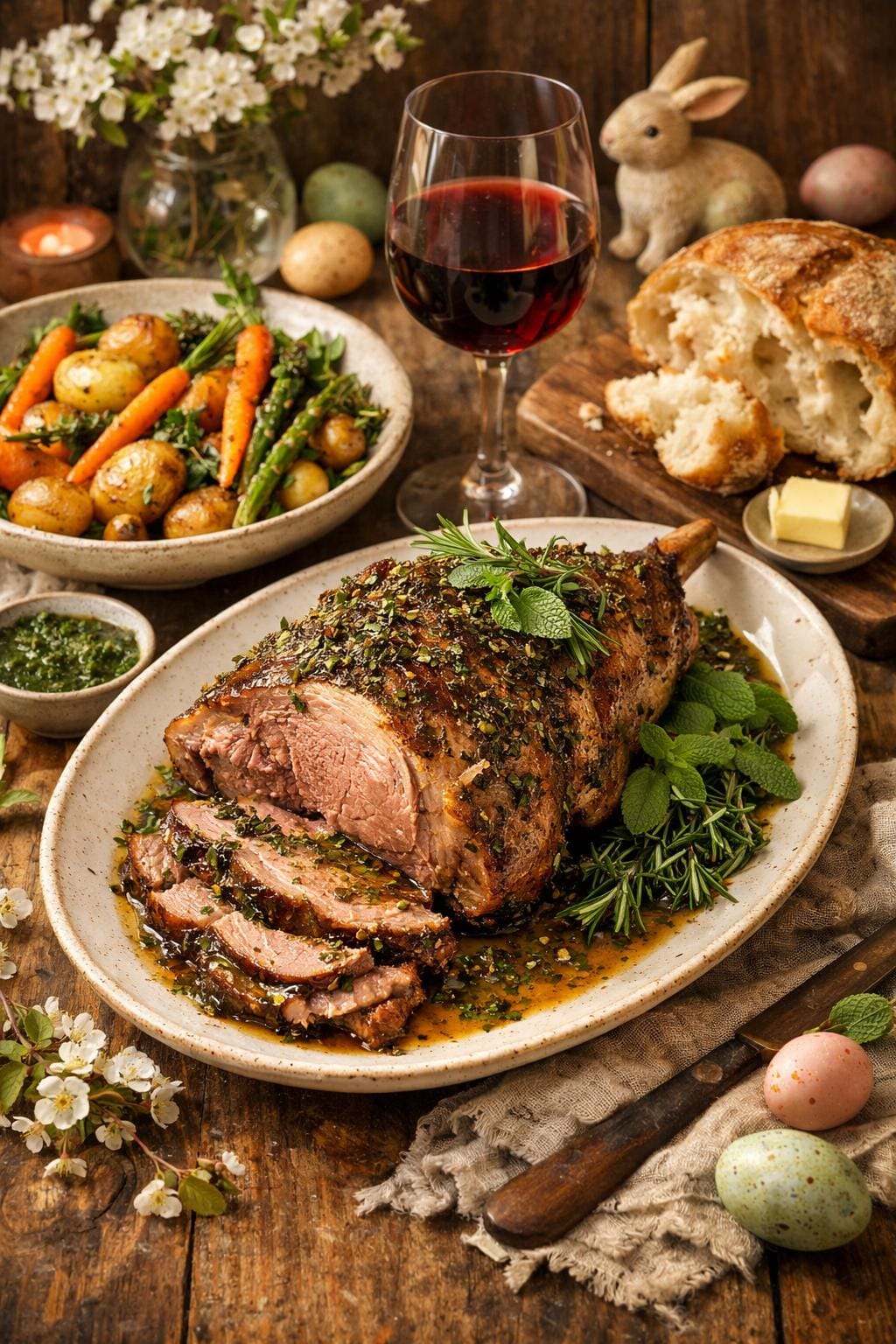
Herb-Kissed Spring Lamb Roast with Rosemary–Mint Pan Sauce
A resurrection dinner worthy of the occasion — fragrant with sacred herbs, golden with spring honey, built to be the centerpiece of your holy weekend table.
Ingredients
- 1 bone-in leg of lamb, 4–5 lbs
- 6 cloves garlic, slivered
- 3 tbsp fresh rosemary, chopped
- 2 tbsp fresh thyme leaves
- 2 tbsp fresh mint, chopped + extra to finish
- 3 tbsp raw local honey
- 3 tbsp good olive oil
- Zest & juice of 1 lemon
- Sea salt & cracked pepper
- 1 cup dry white wine (for pan sauce)
- 1 cup lamb or chicken broth
- 1 tbsp cold butter (to finish sauce)
Method
- The night before, make a paste of garlic, rosemary, thyme, mint, honey, olive oil, lemon, salt, and pepper. Rub deeply all over the lamb. Refrigerate uncovered overnight to allow the herbs to penetrate.
- Bring the lamb to room temperature 1 hour before cooking. Preheat oven to 450°F.
- Roast at high heat for 20 minutes to develop a golden crust. Reduce to 325°F and continue roasting until internal temp reaches 130–135°F (medium rare), about 1–1.5 hours more.
- Rest the lamb 20–25 minutes, tented with foil. This is a special meal — don't skimp on details.
- While the lamb rests, pour off excess fat from the pan, add wine, and deglaze over high heat, scraping up all the caramelized herb bits. Add broth, reduce by half, swirl in cold butter, and a handful of fresh mint.
- Slice and serve with the glossy, herbal pan sauce poured over the top.
✦ Serve alongside: roasted spring vegetables, warm crusty bread, and a glass of something red and earthy. The herbs on that lamb are the same herbs the ancients burned in spring — now they are your dinner.
✦ ✦ ✦
Whether you're roasting lamb for a crowd, steeping herbs into something sparkling and golden, or simply lighting a candle and sitting quietly with the season — I hope this Easter weekend finds you well-fed, well-loved, and a little more connected to the ancient, living world beneath your feet.
These herbs have been on spring tables for thousands of years. And now they're in your kitchen, in your hands, in the food you're making for the people you love.
✦ ✦ ✦
If You'd Like Another Herbal Recipe
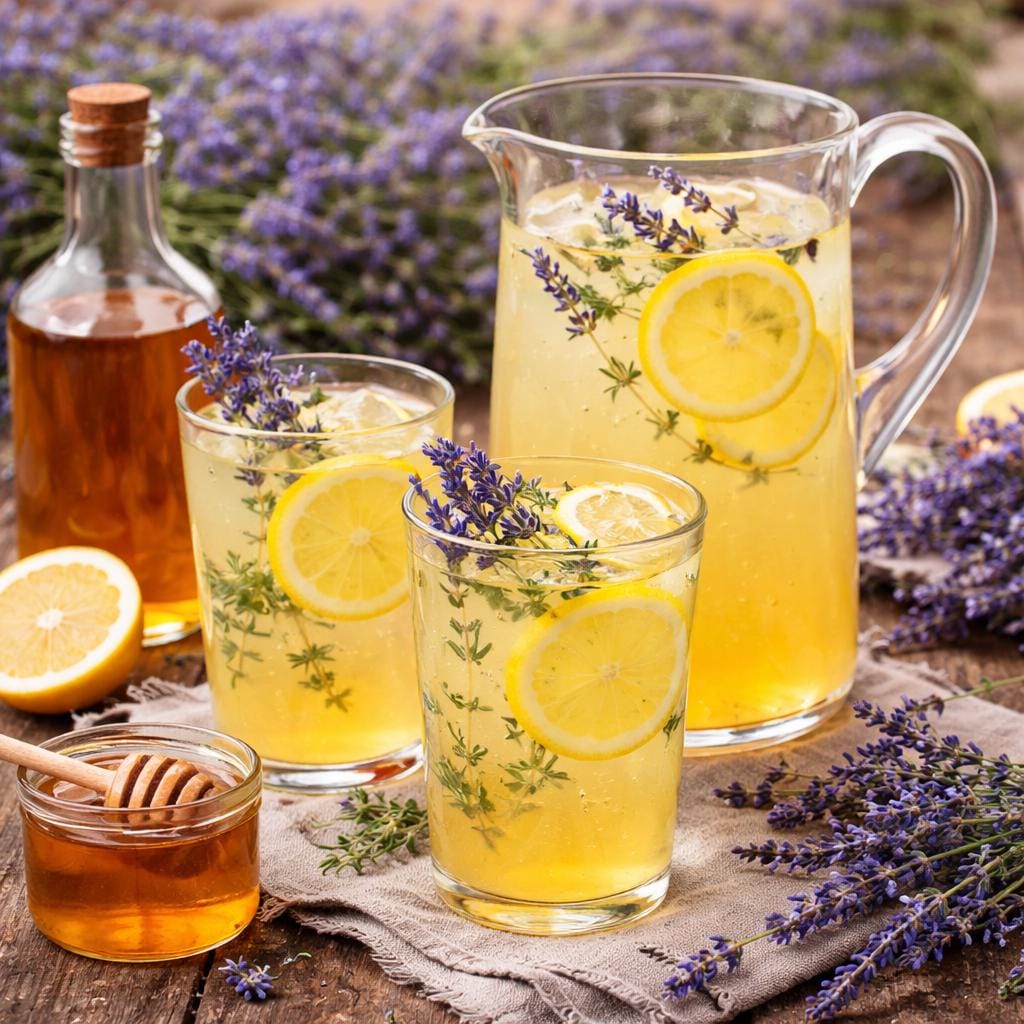
I've put together a beautiful downloadable recipe card for The Apothecary's Easter Elixir — a sparkling lavender-thyme honey mead lemonade steeped with all four sacred spring herbs. It includes the full recipe, herb lore notes, a ritual guide for the making, and apothecary healing notes for every ingredient. It's the kind of thing you keep handy in your kitchen or gift to your most herbal-hearted friend.
👉 Find it in Tracy's Cozy Kitchen on Etsy
And if you haven't already — subscribe below so you never miss a Tuesday. Every week I'm here: slowing down, talking about herbs, and remembering what the earth has always offered.
From my cozy kitchen to yours — Happy Easter, happy Ostara, and happy spring. 🌿
With Love and Light,
~Tracy