
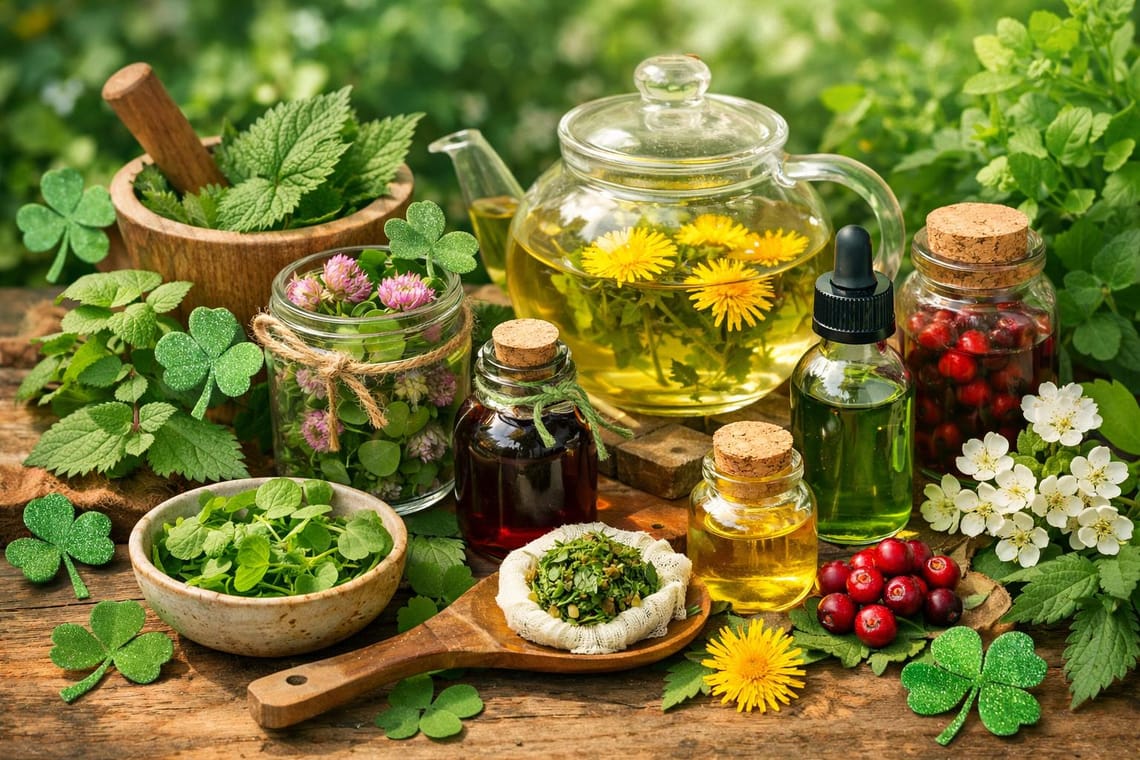
The Apothecary — Five Spring Herbs Worth Knowing Right Now
There's something quietly extraordinary about the timing of St. Patrick's Day.
We dress in green, raise a glass, and celebrate the patron saint of Ireland — but underneath all the festivity lies something older and wilder and far more interesting than shamrocks and parades. The ancient Irish were extraordinary herbalists. They understood the hedgerow the way we understand a pharmacy — as a place you went when something needed healing, when the body needed tending, when the season was shifting, and the wise thing to do was pay attention to what was emerging from the earth.
March was not a passive month in the old Irish herbal tradition. It was an active one. The land was waking up, and the hedgerow healers knew exactly what that meant — certain plants were emerging at precisely the moment the human body needed them most, after a long winter of heavier foods and diminished light.
That's not a coincidence. That's the intelligence of the natural world doing what it has always done.
Today — on the most Irish of days — I want to introduce you to five herbs that are either emerging right now, coming into their peak potency, or deeply woven into the ancient Celtic relationship with the land and its medicine. Some of these may already be growing in your garden or appearing uninvited in your lawn. I'd encourage you to look at them differently after today.
1. Dandelion — Taraxacum officinale
The First Healer of Spring
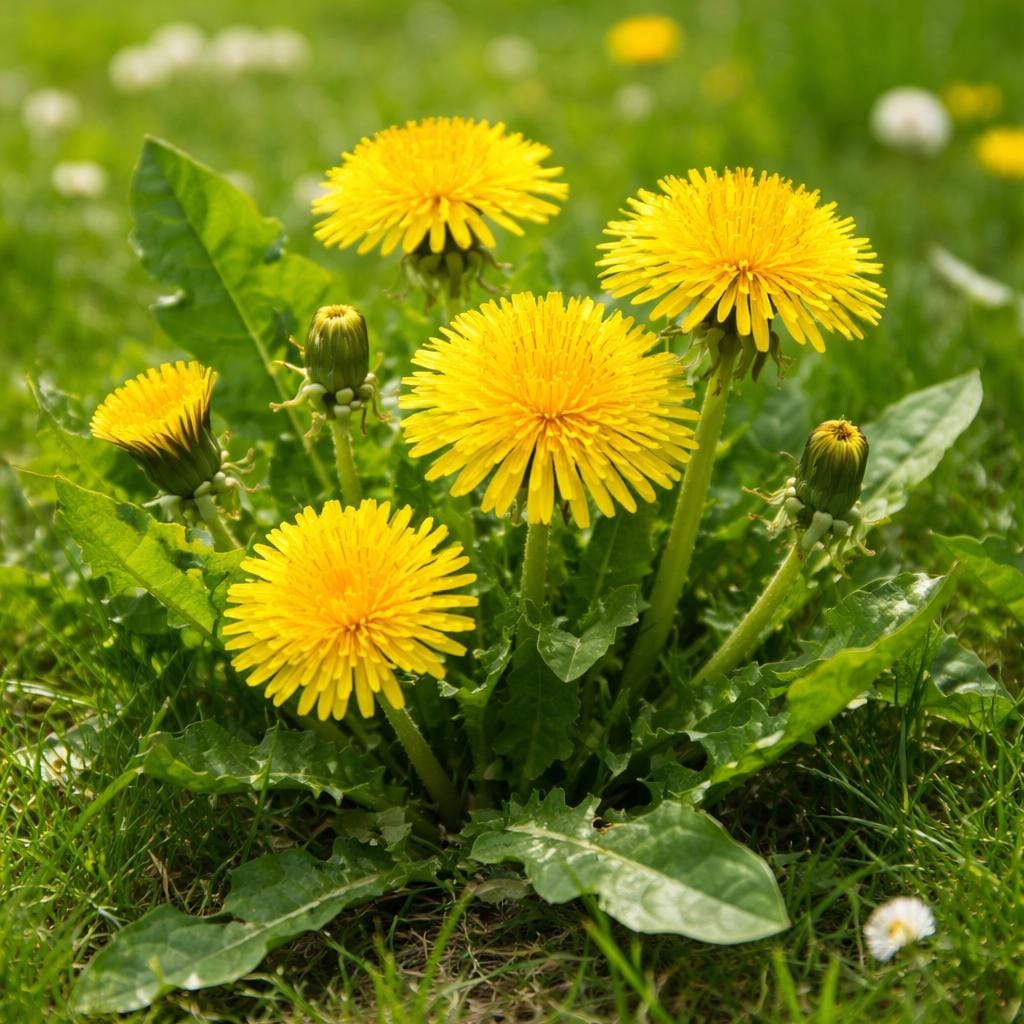
If you have a lawn, you almost certainly have dandelions emerging right now — and if your instinct has been to pull them or spray them, I'd gently ask you to reconsider.
The dandelion is one of the most generous and underappreciated healing plants in the entire herbal tradition. Every part of it is useful — the root, the leaf, the flower — and March is precisely when it begins offering its most valuable gift: the fresh young greens.
Dandelion greens are bitter, and that bitterness is the point. In herbal medicine, bitter plants stimulate digestive function, encourage the liver to produce bile, and gently support the body's natural detoxification processes — exactly what a system that has spent winter on heavier, richer foods genuinely needs.
What it does: Supports liver function. Aids digestion. Acts as a gentle diuretic. Rich in vitamins A, C, and K, plus iron and calcium.
How to use it right now: The youngest, most tender dandelion leaves — gathered before the plant flowers, from an unsprayed lawn or garden — can be eaten raw in salads, wilted like spinach, or steeped as a simple tea. Their bitterness softens slightly when combined with something sweet, like apple or dressed with a good honey vinaigrette.
The healer's note: Dandelion root tea, made from dried or fresh root, is one of the gentlest and most effective spring liver tonics available. Simmer one teaspoon of chopped root in two cups of water for twenty minutes. Strain. Sip slowly. Do this for a week and notice how your digestion responds.
In the old Irish tradition, dandelion was called Caisearbhán — the bitter plant — and was used extensively as a spring blood cleanser and digestive remedy after the lean winter months.
2. Nettle — Urtica dioica
The Iron Queen of Spring
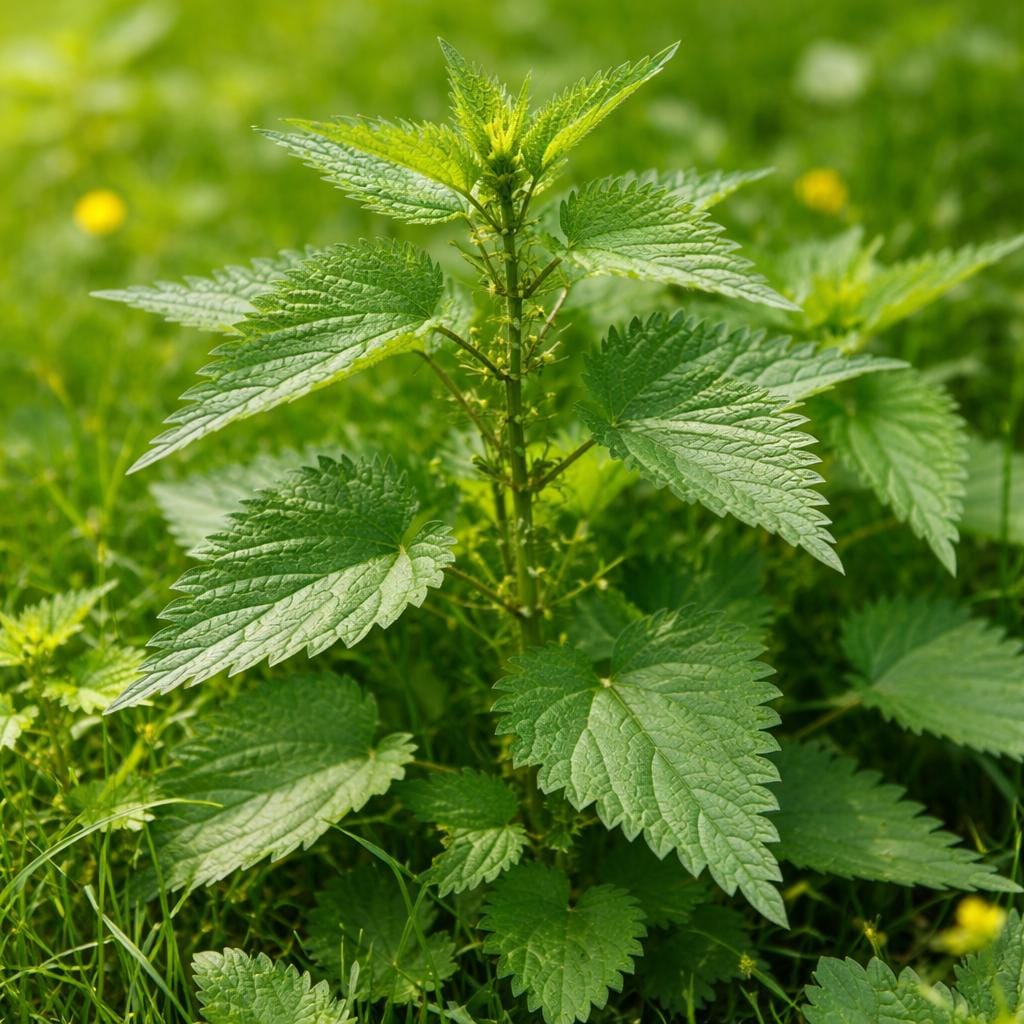
Stinging nettle has a reputation problem. People know it as the plant that stings — and stop there, never discovering that underneath that prickly exterior lives one of the most nutritionally dense and medicinally powerful plants in the entire hedgerow.
March and April are nettle's finest hours. The young spring shoots — emerging now, before the plant flowers and becomes too fibrous — are at their absolute peak of nutritional potency. And potent is the right word. Nettle contains more iron than spinach, significant amounts of calcium and magnesium, vitamins A and C, and a remarkable range of anti-inflammatory compounds.
After a winter of diminished sunlight and potentially reduced fresh vegetable intake, nettle is essentially nature's multivitamin arriving precisely on schedule.
What it does: Builds iron levels naturally. Reduces inflammation. Supports kidney function. Relieves seasonal allergy symptoms — yes, the very plant that stings can ease the histamine response that makes spring miserable for many people.
How to use it right now: Harvest the top four to six inches of young nettle shoots, wearing gloves — the sting is neutralized completely by heat or drying. Steam them like spinach and serve with butter and sea salt. Make nettle soup — a deeply traditional Irish spring dish that is far more delicious than it sounds. Or steep dried nettle as a daily infusion: one heaped tablespoon of dried leaf per cup of just-boiled water, steeped for ten minutes.
The healer's note: For allergy sufferers, begin drinking nettle infusion daily two weeks before your typical allergy season begins. The anti-histamine compounds in nettle work best as a preventative rather than a rescue remedy.
Nettle has been used in Irish folk medicine for centuries — as food, as medicine, and even as fiber for weaving. It was considered a plant of protection and vitality, associated with the coming of spring and the return of strength after winter.
3. Clover — Trifolium pratense / Trifolium repens
The Blood Purifier in Your Garden
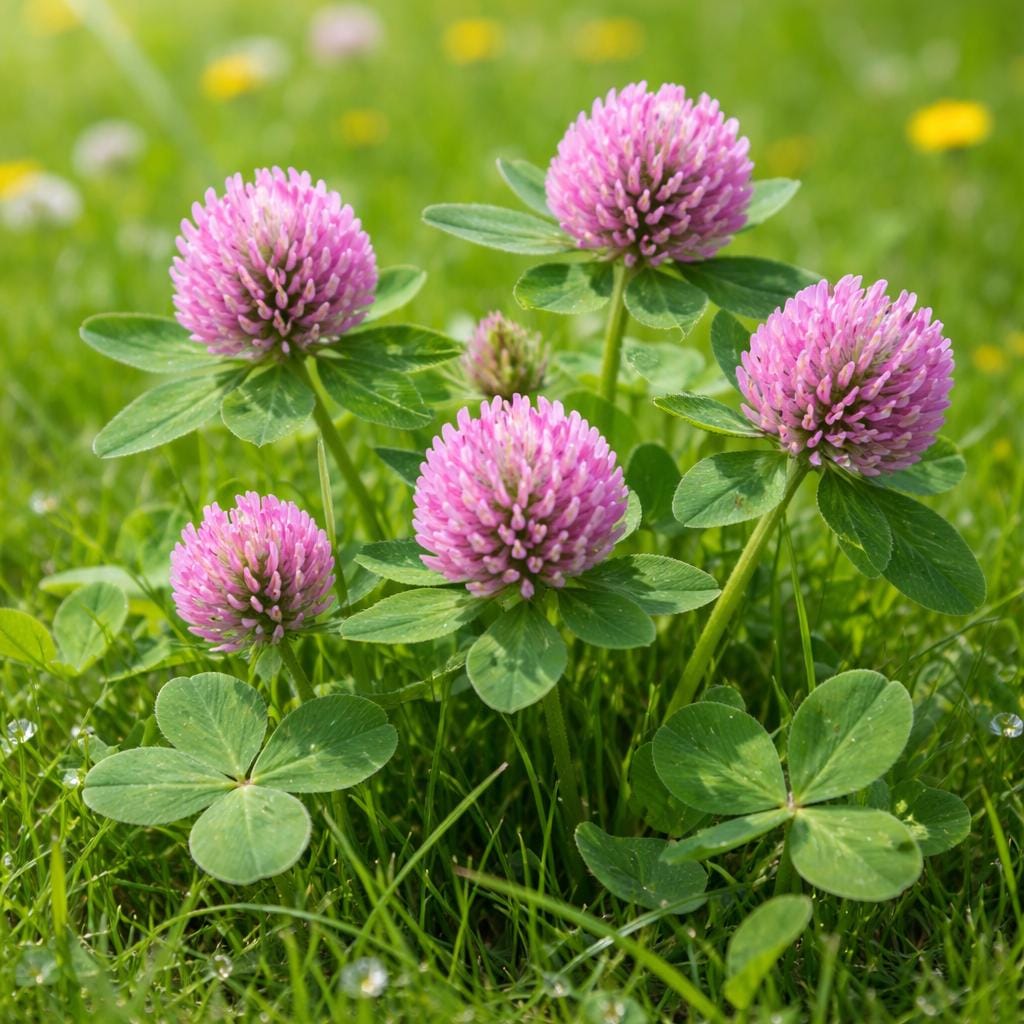
Red clover and white clover are so abundant in Irish fields and gardens that we've almost stopped seeing them — which is a shame, because this humble little plant has a genuinely impressive herbal profile and a deep, meaningful place in Celtic tradition.
The shamrock — Ireland's most beloved symbol — is believed by many historians to be white clover, which Saint Patrick famously used to explain the concept of the Holy Trinity. But long before Patrick arrived, clover was valued in the Celtic herbal tradition as a blood purifier and a plant of good fortune and protection.
Modern herbalism has validated much of what the old healers knew. Red clover in particular contains isoflavones — plant compounds that support hormonal balance, making it particularly valuable for women navigating perimenopause and menopause.
What it does: Supports hormonal balance. Acts as a gentle blood purifier and lymphatic tonic. Contains anti-inflammatory compounds. Red clover isoflavones support bone density and cardiovascular health.
How to use it right now: Fresh clover flowers — both red and white — can be eaten directly, added to salads, or steeped as a gentle floral tea. Dried red clover flowers make a beautiful, slightly sweet herbal infusion that can be drunk daily as a hormonal tonic. Combine with nettle and oatstraw for a nourishing spring infusion that supports the whole system.
The healer's note: If you're in perimenopause or menopause and looking for gentle plant-based hormonal support — red clover infusion drunk daily for several weeks is worth exploring. As always, consult your healthcare provider if you're on any hormonal medications.
On St. Patrick's Day specifically — finding a four-leaf clover is considered the luckiest of all omens. But even the ordinary three-leafed clover growing in your garden is quietly doing something extraordinary. Look at it differently today.
4. Watercress — Nasturtium officinale
Ireland's Ancient Superfood
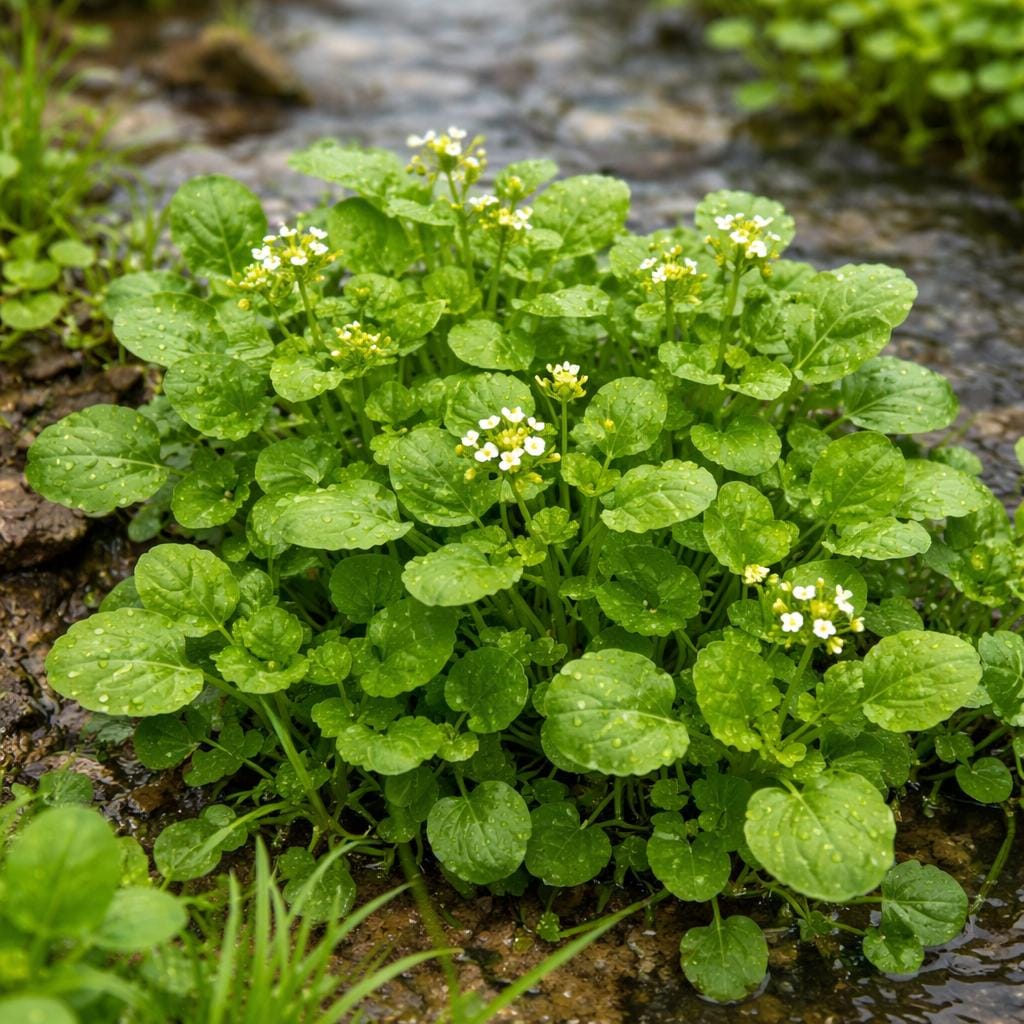
Watercress holds a remarkable place in Irish food and herbal history. It was so valued in early medieval Ireland that it was considered fit for kings and monks alike — referenced in ancient Irish poetry as biorar, a plant associated with hermits and holy men who ate it as sustenance during periods of fasting and prayer.
It grows wild in clean, slow-moving streams and waterways throughout Ireland — and it is emerging right now in its first fresh spring growth, at its most tender and most nutritionally potent.
Modern nutritional analysis has confirmed what the ancient Irish intuitively knew: watercress is extraordinarily rich in vitamins C and K, contains significant calcium, iron, and iodine, and is one of the most nutrient-dense leafy greens available anywhere.
What it does: Supports thyroid function through its natural iodine content. Strengthens bones and supports blood clotting through high vitamin K content. Boosts immune function through exceptional vitamin C levels. Traditional use as a spring tonic and blood purifier.
How to use it right now: Fresh watercress — available in most supermarkets year-round but particularly good right now — is wonderful raw in salads, wilted briefly into soups, blended into a vivid green watercress soup, or simply eaten as a side green with a squeeze of lemon and good olive oil. The peppery bite softens beautifully with light cooking.
The healer's note: Traditional Irish watercress soup — anraith bioráin — made simply with watercress, potato, onion, and good stock, is one of the oldest and most nourishing spring remedies in the Irish culinary and herbal tradition. Make it this week. It tastes like spring arriving in a bowl.
There is something deeply moving about eating a plant that Irish monks ate in the sixth century, that grew in the same streams then as it does now, that has nourished this island for longer than recorded history. Food as connection to something ancient. That's Kitchen Witchery — or whatever you want to call it — at its most real.
5. Hawthorn — Crataegus monogyna
The Heart of the Hedgerow
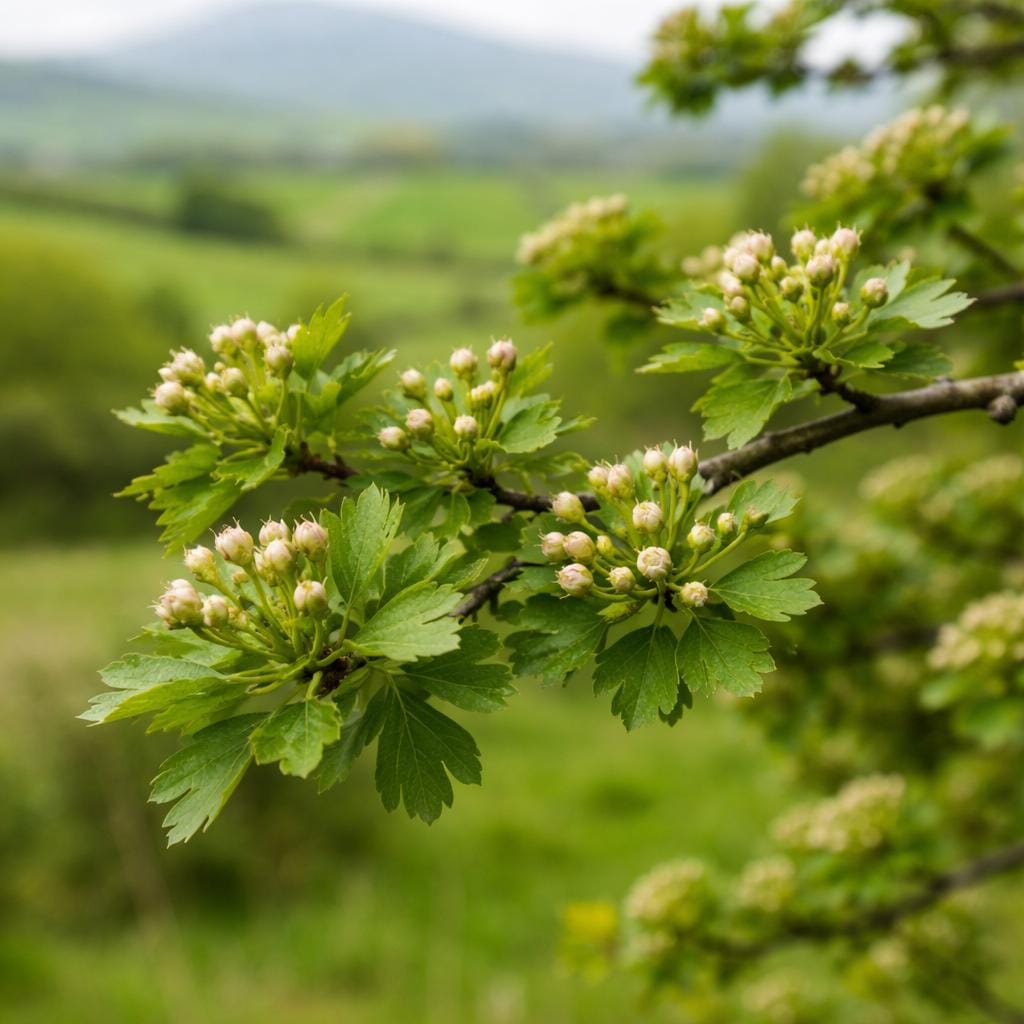
If there is one plant that is utterly, profoundly, irreplaceably Irish, it is the hawthorn.
Hawthorn trees — sceach gheal in Irish, the white thorn — line the ancient field boundaries of Ireland, mark the entrances to sacred sites, and stand alone in fields as fairy trees, so revered in Irish folklore that farmers would plow around them rather than cut them down, for fear of the consequences. There are hawthorn trees in Ireland that are believed to be hundreds of years old, still standing, still flowering every May, still untouched.
The berries — haws — appear in autumn. But in March the hawthorn is just beginning to wake, its buds swelling, the first tiny leaves unfurling in what the Irish call fáilte an earraigh — the welcome of spring. And those young leaves and buds, gathered now before the flowers open, are a traditional spring tonic with a modern scientific basis that is genuinely impressive.
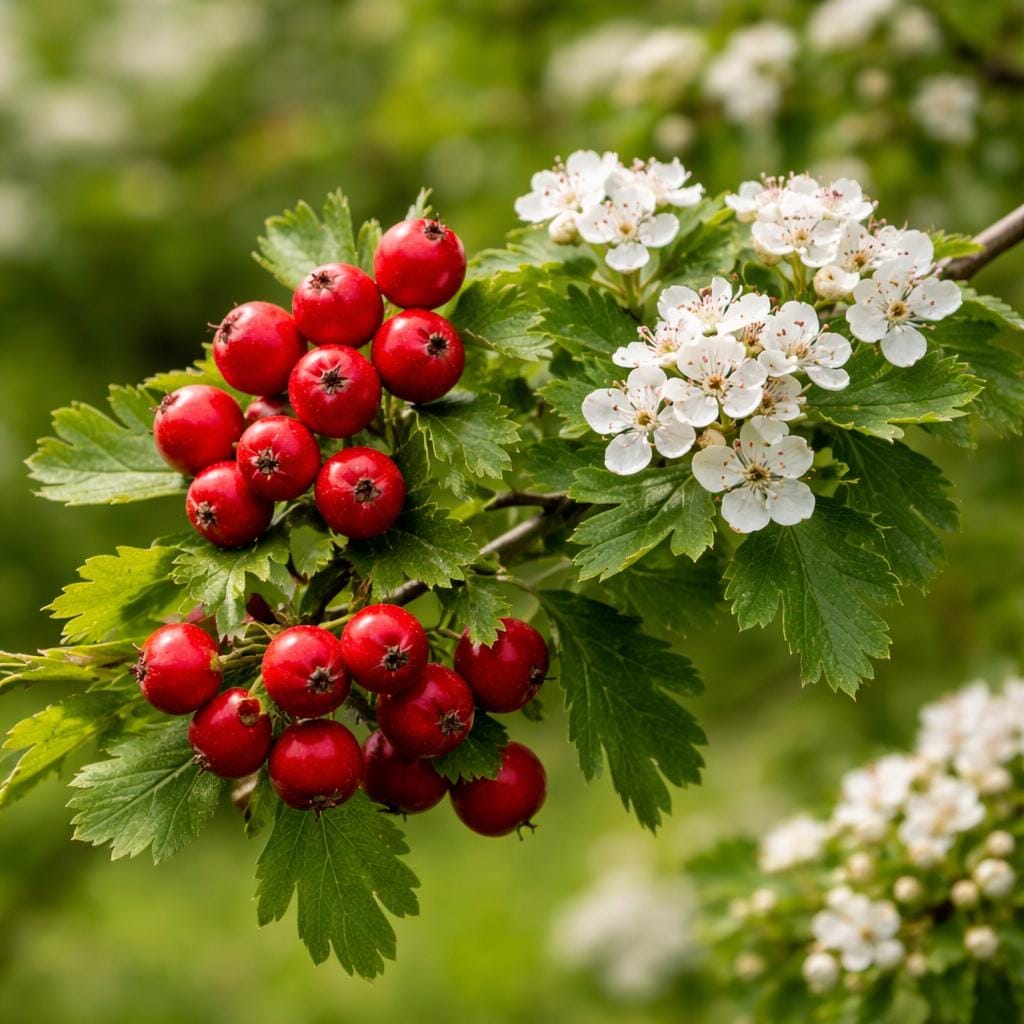
What it does: Supports cardiovascular health — hawthorn is one of the most well-researched herbs for heart function in the entire botanical pharmacopoeia. Strengthens the heart muscle. Regulates blood pressure gently over time. Reduces arterial inflammation. Supports circulation.
How to use it right now: The young spring leaves and buds — sometimes called bread and cheese in English folk tradition because children would eat them as a hedgerow snack — can be eaten fresh, added to salads, or steeped as a simple tea. Dried hawthorn berry tea, available from herbal suppliers, can be drunk daily as a long-term cardiovascular tonic.
The healer's note: Hawthorn works slowly and gently — it is not a rescue remedy but a tonic, meaning its benefits accumulate with consistent daily use over weeks and months. If heart health or blood pressure is a concern for you, hawthorn tea drunk daily is one of the most gentle and well-supported botanical interventions available. Always consult your healthcare provider before using hawthorn alongside prescribed heart medications.
To stand beside an ancient hawthorn tree in Ireland in late March — watching the first green leaves unfurl against a grey sky — is to understand something about resilience and patience and the quiet intelligence of things that have been here far longer than we have. That feeling is medicine too.
A Simple St. Patrick's Day Ritual
Before you close this page — if you have access to any of these plants today, even just a handful of fresh watercress from the supermarket or a dandelion leaf from the garden — I'd invite you to do something small and intentional.
Hold it for a moment. Notice its smell. Its texture. The particular green of it.
Then make yourself a cup of something — dandelion tea, nettle infusion, or simply a cup of whatever you love — and drink it slowly, with the awareness that women have been doing exactly this for thousands of years. Gathering. Steeping. Sitting quietly with a warm cup and the knowledge that the earth provides what the body needs, precisely when it needs it.
That's not superstition. That's not woo-woo. That's pattern recognition so ancient it lives in our bones.
If today's herbs sparked something in you — a curiosity about what else the natural world offers, a desire to go deeper into the wisdom of plant medicine — I wrote The Natural Healing Handbook for Home Remedies exactly for that feeling. It's a practical, accessible guide to natural healing for everyday life — the kind of book that earns a permanent spot on your kitchen shelf rather than a single read and a trip to the donation pile.
You can find it here: https://amzn.to/4788fm9 🌿
Happy St. Patrick's Day. May your hedgerow be generous and your cup always warm. 🍀
With warmth and wisdom, Tracy 🌿
QUICK REFERENCE — YOUR FIVE SPRING HERBS:
| Herb | Primary Benefit | Best Use Right Now |
|---|---|---|
| 🌿 Dandelion | Liver support, digestion | Young leaves in salad, root tea |
| 🌱 Nettle | Iron, anti-inflammatory, allergy relief | Steamed greens, daily infusion |
| 🍀 Clover | Hormonal balance, blood purifier | Flower tea, daily infusion |
| 💧 Watercress | Vitamins C & K, thyroid support | Fresh in salads, spring soup |
| 🌸 Hawthorn | Heart tonic, circulation | Young leaves fresh, berry tea |
DISCLAIMER: The information in this post is intended for educational purposes and reflects traditional herbal use. It is not intended as medical advice. Always consult your healthcare provider before beginning any herbal remedy, particularly if you are pregnant, nursing, or taking prescription medications.